
Introduction
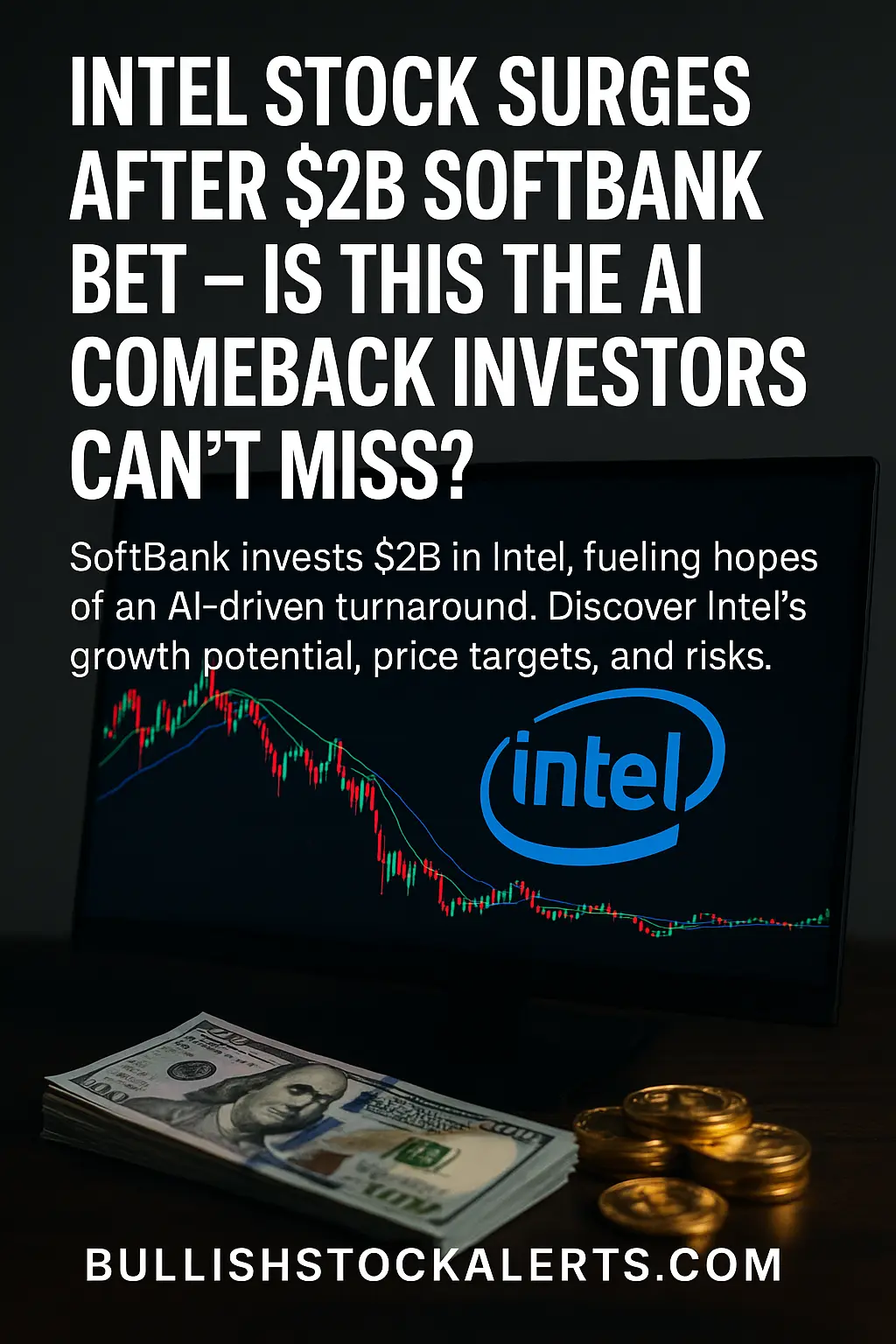
Intel (NASDAQ: INTC) has been battered in recent years, losing ground to rivals like AMD and TSMC while struggling to break into the booming AI chip sector. But a sudden $2 billion equity injection from SoftBank has reignited hopes that the U.S. semiconductor giant could stage a dramatic turnaround. With shares surging over 5% in after-hours trading, the market is asking: is this the long-awaited lifeline Intel needed to compete in the AI arms race?
One of the Best Brokers in Europe
European investors have been following Intel closely as the semiconductor battle shifts from Asia to the U.S. Partnering with leading brokers across the EU allows access to Intel at competitive spreads, making it easier for retail and institutional investors to capture potential upside.
Financial Performance
Intel’s financial performance has been deeply challenged. In 2024, the company recorded its first annual loss since 1986, totaling -$18.8 billion. Weak PC sales, shrinking server chip market share, and underwhelming foundry operations all contributed to the decline.
Key Highlights
- SoftBank acquires ~2% stake in Intel at $23/share.
- Intel shares jump +5.6% aftermarket.
- SoftBank will not seek a board seat or commit to chip purchases.
- The U.S. government is rumored to consider a 10% stake in Intel.
- Intel remains a central piece in U.S. semiconductor sovereignty ambitions.
Profitability and Valuation
At $23–24/share, Intel trades at a steep discount to its historical P/E multiples. While profitability is under pressure, the entry of SoftBank suggests deep-pocketed conviction in Intel’s long-term AI positioning. If Intel successfully stabilizes margins, valuation rerating could follow quickly.
Debt and Leverage
Intel carries a significant debt burden after years of heavy capex into its foundry business. However, SoftBank’s direct equity purchase strengthens the balance sheet by injecting fresh capital without adding debt.
Growth Prospects
Intel’s turnaround hinges on capturing AI-driven demand, securing foundry clients, and regaining relevance in PCs and servers. If it can position itself as the U.S. alternative to TSMC, growth prospects remain enormous.
Technical Analysis
- Short-Term (Daily): Intel broke key resistance at $23, fueled by heavy volume. RSI signals near-term overbought, but momentum favors bulls.
- Medium-Term (Weekly): A base has formed around $20; next resistance sits at $27.50.
- Long-Term (Monthly): If Intel’s AI turnaround sticks, upside toward $35–40 remains realistic within 12–18 months.
Potential Catalysts
- U.S. government potentially taking a 10% stake.
- New AI partnerships and foundry client wins.
- Global trade deals incentivizing domestic chip production.
- Further capital injections from sovereign funds or strategic allies.
Leadership and Strategic Direction
CEO Lip-Bu Tan, a veteran of the semiconductor industry, is betting big on restoring Intel’s competitiveness. With SoftBank’s Masayoshi Son backing the strategy financially, leadership alignment has improved significantly.
Impact of Macroeconomic Factors
Intel sits at the center of the U.S.–China tech rivalry. Washington’s push for domestic semiconductor dominance aligns directly with Intel’s turnaround plan. Any new subsidies or federal contracts could supercharge growth prospects.
Total Addressable Market (TAM)
The global AI chip market is projected to exceed $500 billion within the next decade. Intel, with its dual designer–manufacturer model, is uniquely positioned to capture a slice of this TAM if execution improves.
Market Sentiment and Engagement
The market has been deeply skeptical of Intel for years. But the SoftBank investment has triggered a surge in retail interest and improved institutional sentiment. Social media chatter indicates renewed investor optimism.
Conclusions, Target Price Objectives, and Stop Losses
SoftBank’s $2B injection doesn’t solve all of Intel’s problems, but it signals confidence at a critical turning point. With AI growth accelerating, Intel has an opportunity to reestablish its dominance.
🎯 Target Price Objectives:
- Short-Term (1–3 months): $27.50
- Medium-Term (6–12 months): $32
- Long-Term (12–18 months): $38–40
⛔ Suggested Stop Loss: $19.50
Risk remains high given Intel’s execution challenges, but the asymmetric reward potential is too large for investors to ignore.
Discover More
For more insights into analyzing value and growth stocks poised for sustainable growth, consider this expert guide. It provides valuable strategies for identifying high-potential value and growth stocks.
We also have other highly attractive stocks in our portfolios. To explore these opportunities, visit our investment portfolios.
This analysis serves as information only and should not be interpreted as investment advice. Conduct your own research or consult with a financial advisor before making investment decisions.
Looking to Educate Yourself for More Investment Strategies?
Check out our free articles where we share our top investment strategies. They are worth their weight in gold!
📖 Read them on our blog: Investment Blog
For deeper insights into ETF investing, trading, and market strategies, explore these expert guides:
📘 ETF Investing: ETFs and Financial Serenity
📘 Technical Trading: The Art of Technical & Algorithmic Trading
📘 Stock Market Investing: Unearthing Gems in the Stock Market
📘 Biotech Stocks (High Risk, High Reward): Biotech Boom
📘 Crypto Investing & Trading: Cryptocurrency & Blockchain Revolution
Did you find this article insightful? Subscribe to the Bullish Stock Alerts newsletter so you never miss an update and gain access to exclusive stock market insights: https://bullishstockalerts.com/#newsletter.
Avez-vous trouvé cet article utile? Abonnez-vous à la newsletter de Bullish Stock Alerts pour recevoir toutes nos analyses exclusives sur les marchés boursiers : https://bullishstockalerts.com/#newsletter.






0 Comments